If you haven't realized it by now, I love strong female protagonists. What do I mean by strong female protagonist? I don't necessarily mean a female protagonist with great physical strength, but a female character with strong writing behind her. There are sadly far too few strong female protagonists in anime and comics, or at least consistently well-written ones. Wonder Woman's a feminist icon forever, but she's never been a consistent character thanks to her various writers have different ideas on how she works as a character. To end Lupin Month, we'll be taking a look at another long-running iconic woman of media, Fujiko Mine. She's long been a staple of the Lupin franchise, but never been the main character. In the original anime series, she served as somewhat of a foil to Lupin. They were both thieves, but unlike Lupin who was in it for the glory and thrills, Fujiko was in it for the treasures and riches. She was just as skilled at Lupin when it came to stealing, but she had the bonus of her sexuality to pull the wool over her enemies, and over Lupin when she didn't feel like sharing. While Lupin III is known more for its wacky characters and over-the-top heists, Fujiko was a well-rounded character. She'd occasionally get kidnapped, but she was extremely competent for a woman in an action series, and in a 70's anime that's nearly unheard of. So it only makes sense that she'd get her own TV series, albeit not until 2012.
Lupin III: The Woman Called Fujiko Mine
Directed by Saya Yamamoto
Written by Mari Okada
So, what happens when your franchise lasts for over 40 years? Either you let it die, or you completely revamp it and do something daring with it, and Fujiko Mine definitely fits the latter. While the characters are mostly consistent with their personalities from earlier incarnations, the tone of this series is drastically different from previous series. The comedy is much more subdued this time around, instead focusing more on the characters and what makes them tick. That's not to say there isn't any comedy. No one can not laugh at the site of Lupin surfing on a rocket-powered statue made of drugs, but moments like that happen only once in awhile in this show.
There's an actual narrative arc in this series, which is unheard of for a Lupin TV series. The first half is mostly episodic, but it's main purpose is to reintroduce the main cast of Lupin III, and one brand new character. This is supposed to be the first time the cast has met each other, with the exception of Lupin and Zenigata already knowing each other. Lupin lays eyes on Fujiko for the first time and makes stealing her heart one of his new goals in life. We learn why Jigen is so distrustful of Fujiko. We learn of the odd relationship between Fujiko and Goemon. While formulaic, it never gets old, as each adventure finds a new way to thrill the audience and introduce newcomers to these iconic characters. The brand new character I mentioned earlier is Oscar, Zenigata's young assistant who has an unrequited crush on his superior, and he's sadly the weakest link of the story. While each character in the future Lupin gang goes through their own character arc, Oscar's arc goes nowhere. There's a set-up to explain why he hates Fujiko, because he views her as a threat to his love for Zenigata, but he lacks any solid conclusion, which is a shame because the writers seemed to have a lot planned for the character, and we might never know what those plans were. However, he's a minor character in the grand scheme of things.
While this is technically a Lupin story, Fujiko Mine is undoubtedly the star here. All of her skills are on display here: her seduction, her craftiness, and her ruthlessness. It's a great way to highlight the character, and it's consistent with her character from the Green Jacket series. Given that the series directly references the Green Jacket series a few times, most notably by giving Lupin the green jacket again, it's easy to assume that the creators of this series loved that series and really get the characters. The first 7 episodes work as both fun adventures and character analysis pieces, giving viewers the best of both worlds. But what of the last half?
This is where the series will lose some people. It's far from bad, but it ends up in a place that some people didn't want. Throughout the series, there are hints of Fujiko's backstory, and that the series will eventually answer the question "who is Fujiko Mine?". Does the series answer this question? Yes and no. The ending takes a turn for the unexpected, putting to bed any red herrings the series throws at the viewer in the second half. Some viewers will likely get angry at this, but it actually makes the ending better than what was expected. To relate this to recent events, one of the major failings of female-driven stories is the misconception that they need to be about things that happen to women, and one thing people assume happens to women, and only women, is rape. This was a huge controversy when the latest Lara Croft video game was announced. The red herrings imply a similar incident for Fujiko, and these kinds of stories can be rather sexist, because they misuse horrifying events to separate female characters from male characters, and it shows a lack of understanding. The women behind this series, and yes, both the writer and director for this series are women, understood the implications of what they were doing, and by doing so they were able to destroy any negative conceptions viewers had of the character. I'd go as far saying this is a rare feminist anime, because it understands the gender roles of both men and women and manages to subvert the hurtful stereotypes associated with them.
Yes, Fujiko uses her body as a weapon and is frequently nude, and fanservice tropes are something I criticize heavily, but it's not because I think sex is wrong. Quite the contrary, sex is a wonderful thing. It's objectification that's the issue with many fanservice shows, and this show subverts that. While Fujiko is exposing herself for the pleasure of others, she's still in full control of her body. Every member of the Lupin gang has their own weapon. Lupin has his wily craftiness, Jigen has his marksmanship, Goemon has his sword, and Fujiko has her sexuality. Sexuality is just something that's part of Fujiko's life, and her using that is not wrong, nor is it a mark against the series. I actually have to praise the series for using sexuality as both a part of the character and narrative as opposed to using it as a cheap way to cash in on fanservice like so many other shows do. It's handled with great maturity, and anyone calling it a bad thing will miss the point of the show entirely.
While I won't spoil the answer the series gives to the question "who is Fujiko Mine?", it will open your eyes to the character, and you'll come out of the show thinking of her in a new light. That answer might not be what everyone wants, but at the end of the day it's the answer that's needed.
Not only is The Woman Called Fujiko Mine different from previous Lupin incarnations on a story-level, it's a completely new beast on an animation level. The characters have received brand new designs. They still resemble their old character models, but there's a new sharpness to the characters. The artwork is extremely ambitious here, using heavy penciled lines to represent shadows everywhere it can, creating a sort of noir vibe. Then there are times where the artwork becomes psychedelic. There are several dream sequences in which Fujiko is surrounded by butterflies and owls, common motifs for the series, and the coloring and character designs become quite deranged. Visually, there's nothing else like this series. Sadly, the show clearly does not have the budget it wanted. There are scenes where the animation looks really cheap and janky, and it might be a distraction for some viewers, but the gorgeous art and great characters more than make up for it.
The Woman Called Fujiko Mine is a series with high ambitions, and while it falls short of some of its goals, it's still a great show, both as a standalone story about a strong female protagonist and an introduction to the Lupin characters. Some won't like the answers it gives or that it features nudity, but they'll be missing out on what is the best Lupin story in years.
BUY IT/STREAM IT!
The Woman Called Fujiko Mine is currently streaming on Hulu and Funimation.com. It's been licensed by Funimation Entertainment for a video release and will most likely be available for purchase in 2013.
Showing posts with label Lupin III. Show all posts
Friday, September 28, 2012
Friday, September 14, 2012
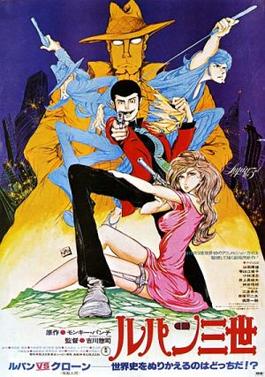
Review: Lupin III: The Secret of Mamo
Spoiler alert: I was actually going to review the first Lupin III anime series this week, but tests have kept me from rewatching the entire thing. You'll be seeing that review next week. Instead, enjoy my review of the first feature Lupin film, The Secret of Mamo.
Lupin III: The Secret of Mamo
Directed by Soji Yoshikawa and Yosuo Otsuka
Summary: "Lupin, the master thief/spy/Jack of all Trades, has been executed, but he is still alive, and not even Lupin himself knows how that is possible. While trying to figure out, however, he and his gang are thrust into a conspiracy involving clones, Lupin's un-trustworthy rival Fujiko, and a minature mad-madman's plot to take over the world." (from AnimeNewsNetwork)
This is both a typical and atypical Lupin movie. My first time watching this, all I could remember was seeing the bizarre reveal at the end, which I won't spoil here. Watching it a second time, the first half is full of the stuff you expect from a Lupin adventure, but then the second half hits and we enter a scifi conspiracy film. It's cool stuff and once you wrap your head around it, it's a good movie, but on your first time watching it you will be stunned.
Let's start from the beginning. The movie begins with Lupin being executed. Well, short movie, right? Inspector Zenigata refuses to believe he's dead, and after a Dracula homage and a quick escape, Lupin is alive and kicking. We cut to Lupin and the gang stealing the Philosopher's Stone as part of a contract, but Fujiko being the traitor she is, takes it from Lupin to claim the reward from a mysterious man named Mamo. The gem turns out to be a fake, and understandably Mamo is pissed by this, so he tries to have the Lupin gang killed. What follows is several chase sequences involving helicopters, planes, and a giant truck that vaguely looks like Optimus Prime being sent after Lupin. Naturally, Lupin manages to give them the slip, but ends up being stranded in the desert, where the Lupin gang dissolves after a lot of in-fighting.
The animation isn't very notable for a 70's animated film, only being a bit better than the Lupin TV series that was airing at the time. Still, the chase sequences are well-done and will grab your attention, and there's still the classic Lupin slapstick and sexual humor. Then things get weird, but I'll try to explain it without spoiling much.
Mamo's an interesting Lupin villain. He's not the first to claim mystical powers, that honor belonging to Pycal. He does however have access to technology that shouldn't exist for centuries, including cloning. He's actually been cloning himself to stay alive for centuries, with his life spanning back to ancient times, or at least so he claims. His evil plan is to become god of the earth, and to do that he needs to find true immortality, and he offers to Fujiko and Lupin immortality because he finds them worthy. He's more of a sci-fi villain than a mystical villain, but a reveal near the end makes him an almost otherworldly adversary for Lupin, making him one of the more unique and memorable villains in Lupin history.
So does the sci-fi conspiracy mix well with the comedic action of Lupin III? I think it helps that the film eases the audience into the weirdness that is Mamo by starting out with the typical Lupin tropes, only scaled up for a feature film debut. The reveal at the end is still bizarre and some fans might find it unacceptable, but after a second watch I consider it one of the highlights of the film and a reason to watch it. There are other bizarre moments in the film, such as an American agent insulting Jigen by calling him a Democrat (this was during a time when the president was a Democrat), a Lupin comic featuring DC Comics characters making a brief appearance, and Lupin meeting Hitler. No, that all actually happened. I could probably point every weird thing that happens in this movie, but we'd be here all day.
| Oh hi Godwin's Law. |
The story overall is an epic one for the Lupin gang. While characters like Goemon and Zenigata have little to do in this movie, they still have their crowning moments of glory, such as Goemon taking out a helicopter with a sword and Zenigata leaving the police force just so he can still hunt Lupin. Lupin and Jigen are the same characters as usual, but Fujiko's more of a damsel in distress this time around. She's still great at manipulating both sides, but she needs to be saved a few times and spends a lot of time screaming. Fujiko's gotten herself in hairy situations before, but she's never been a true damsel in distress. She's always had a backup plan of some sort, or at least managed to put on a confident face when in danger. If you want to see Fujiko being awesome, this is not the Lupin feature for you.
Now for the dub, or rather dubs of this movie. This movie has a long history of English dubs. It was first dubbed back in 1978 for Japanese Airlines by Toho, but that dub is extremely rare and few people have heard it. The second dub was released in America by Streamline Pictures in 1995, starring Bob Bergen as Lupin, and Manga Video released a dub for the UK a year later. In 2003, Geneon took a crack at dubbing the movie with the same cast they used to dub the second Lupin III TV series, featuring Tony Oliver as Lupin, Richard Epcar as Jigen, Lex Lang as Goemon, Michelle Ruff as Fujiko, and Jake Martin as Zenigata. Tony Oliver's a decent Lupin, but never been my favorite rendition of the character in English. He sounds comedic enough, but he lacks the gusto that makes the character as fun and tough as he is. Epcar as Jigen is pretty good, appropriately gruff and deep enough and never letting up on the snark. Sadly, Goemon and Fujiko sound flat in comparison. Lex Lang sounds like he's reading his lines off a script and never emotes. Goemon is a stoic character, but he's not supposed to sound like a robot. Michelle Ruff is slightly better, but her attempts at sounding sexy sound fake, and she doesn't have the fun dangerous undertones that the Japanese actress had. Zenigata sounds like a redneck and it's just weird. Paul St. Peter as Mamo does a good job of playing the power hungry villain. He's never over-the-top, but his sinister tone and air of superiority are carried through his voice. The only dub I've seen is the Geneon dub, and it's the easiest to find, being available to watch on Hulu. It's an okay dub, though definitely not the best Lupin dub I've heard.
Overall, for the first Lupin III film, Secret of Mamo is a memorable trip, full of adventure and comedy you expect from Lupin with some weird science fiction to spice it up. Maybe the science fiction will be too spicy for some to handle, but I think it gives the film some much needed weight. It's not the best Lupin film; Hayao Miyazaki's Castle of Cagliostro beats it out on pretty much every level, but it's a worth a watch for anyone curious about Lupin.
Sadly, Secret of Mamo has been out-of-print for awhile, but there is some good news. As I mentioned earlier, the film is streaming on Hulu. Discotek Media recently acquired the film's license, and they plan to release the film with not 1, not 2, but all 4 English dubs, including the rare Toho dub. Discotek usually puts a lot of effort into their Lupin releases, and it looks like this will be the must-have version of Secret of Mamo. When it comes out, I recommend buying it.
BUY IT!
Friday, September 7, 2012
Review: Lupin the Third Vol. 1
If you weren't aware by now, I am a fan of the Lupin the Third franchise. First appearing in Weekly Manga Action in 1967 and based on the French gentleman thief Arsene Lupin, the franchise has spawned numerous manga, anime, movies, and merchandise for over 40 years, and new Lupin stories are being made every year in the form of TV specials. It's considered by many to be the granddaddy of all seinen anime and manga, one of the first to break the notion that anime and manga were just for kids.
There's a slew of Lupin material out there to review, more than enough to fill out a month of reviews. That's right, for 4 weeks I'll be reviewing various Lupin the Third stories, starting with the very first volume of the manga.
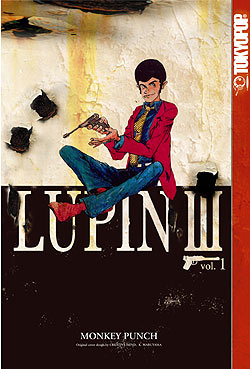
Lupin the Third Vol. 1
Created by Monkey Punch

Brief summary from the back of the book: "In this thrilling volume, the master thief extraordinaire pilfers top-secret microfilm, escapes a high security prison, rescues a captured spy, challenges the underworld, is trapped on a desert island, and beds a bevy of beautiful dames while doing it all."
Try as I might, this was not my first exposure to Lupin the Third, and some of these chapters have been adapted into anime, so I will make a few comparisons between the manga and the anime adaptations. I will try my best to review this as its own entity.
The first thing that pops out the reader is the artstyle. It's extremely bizarre and cartoony, and not always consistent. In the first chapter, it's not uncommon for the characters' heads to be almost the size of their torsos. There are also some cases of characters looking the same, such as some background characters looking exactly like Lupin, and even Inspector Zenigata, the cop who's constantly hunting Lupin, has this problem early on. This isn't always the case in each chapter. The artstyle is certainly unique, I'll give it that, but it feels unrefined in this first volume. I wouldn't call it good, but an acquired taste.
As for the story, well, in true Lupin the Third fashion, this isn't one story, but rather a collection of chapter-long adventures. Lupin, being the master thief he is, is often just trying to steal something, or he gets caught up in a conspiracy or needs to make a jailbreak. Lupin's a character full of tricks: he's a master of disguise, has various gadgets at his disposal, and is extremely crafty, all skills needed to be a master thief. However, comedy and sex are equally as important as the adventure. As odd as the artstyle is, Monkey Punch is really good at drawing some of the funniest facial expressions ever, which saves it from being bad. This is an adult manga, willingly showing death, naked woman and to a smaller extent some sex, but it's not shy about having some Looney Tunes zaniness into the mix. Despite the number of deaths in this manga, and there are quite a few, there are just as many times where a character suffers a grievous injury of some sort and comes out with smoky face, again like a Looney Tunes cartoon.
Lupin himself is well-represented here: he's got his usual tricks and his penchant for adventure and women, but what about the other big characters for the franchise? Jigen, Lupin's most trusted assistant, appears in one chapter, the chapter featuring an invincible magician going after Lupin. However, it's Jigen in appearance only, as the character is never named and never once alludes to being a skilled gunman, one of Jigen's defining traits. This chapter in particular was adapted into the first anime series, and Jigen was not only named in that, he actually did something besides being another character for Lupin to talk to. Zenigata makes a few appearances as well, and he's pretty consistent with his later depictions. He's a competent cop with an obsession with Lupin, but he's always one step behind him.
Fujiko, Lupin's famous on-and-off girlfriend who's equally good at fooling him and his enemies alike, is actually multiple characters in this. Lupin runs into several women throughout the manga, all of them attractive and willing to have sex even if they protest at first. A few of the women are named Fujiko, but none of them really resemble the Fujiko that Lupin fans know today. Monkey Punch just really liked the idea of naming most of his women Fujiko. Lastly, Goemon, the famous swordsman who can cut through anything, is nowhere to be found here, but there is a character who resembles him, though that character uses a gun instead of a sword.
Let's get down to the meat of this review: is this worth reading for people new to Lupin? Eh, I wouldn't say it's a must-buy. It's certainly different from many manga being made nowadays, but some of the stories are hit-and-miss, and the objectification of women might not gel well with a modern audience. There are some genuinely funny moments here and there, and the story of how Lupin escaped a high-security prison is really good, being both hilarious and thrilling. The artstyle is definitely going to alienate some people, which is why I recommend renting this from a library if you can.
For fans of the Lupin anime or manga history buffs, I'd say this is worth owning if you can find it. Not all of these stories were adapted to the anime to my knowledge, so if you need more Lupin in your life, this isn't a bad choice. I will warn you: it's far raunchier than most of the anime adaptations. Jokes about masturbating with toes aren't uncommon.
RENT IT (if you're new to Lupin the Third)
BUY IT (if you love Lupin the Third and need to collect more of it)
Now here comes the bad news. The Lupin the Third manga was licensed by Toykopop, and they went out-of-business not too long ago, which means the manga is now out-of-print. You'll have to do some hunting to find this one, but if you're lucky, you might be able to find some copies at a local used bookstore like I did, and I got my copy for a cheap 5 bucks.
There's a slew of Lupin material out there to review, more than enough to fill out a month of reviews. That's right, for 4 weeks I'll be reviewing various Lupin the Third stories, starting with the very first volume of the manga.
Lupin the Third Vol. 1
Created by Monkey Punch
Brief summary from the back of the book: "In this thrilling volume, the master thief extraordinaire pilfers top-secret microfilm, escapes a high security prison, rescues a captured spy, challenges the underworld, is trapped on a desert island, and beds a bevy of beautiful dames while doing it all."
Try as I might, this was not my first exposure to Lupin the Third, and some of these chapters have been adapted into anime, so I will make a few comparisons between the manga and the anime adaptations. I will try my best to review this as its own entity.
The first thing that pops out the reader is the artstyle. It's extremely bizarre and cartoony, and not always consistent. In the first chapter, it's not uncommon for the characters' heads to be almost the size of their torsos. There are also some cases of characters looking the same, such as some background characters looking exactly like Lupin, and even Inspector Zenigata, the cop who's constantly hunting Lupin, has this problem early on. This isn't always the case in each chapter. The artstyle is certainly unique, I'll give it that, but it feels unrefined in this first volume. I wouldn't call it good, but an acquired taste.
As for the story, well, in true Lupin the Third fashion, this isn't one story, but rather a collection of chapter-long adventures. Lupin, being the master thief he is, is often just trying to steal something, or he gets caught up in a conspiracy or needs to make a jailbreak. Lupin's a character full of tricks: he's a master of disguise, has various gadgets at his disposal, and is extremely crafty, all skills needed to be a master thief. However, comedy and sex are equally as important as the adventure. As odd as the artstyle is, Monkey Punch is really good at drawing some of the funniest facial expressions ever, which saves it from being bad. This is an adult manga, willingly showing death, naked woman and to a smaller extent some sex, but it's not shy about having some Looney Tunes zaniness into the mix. Despite the number of deaths in this manga, and there are quite a few, there are just as many times where a character suffers a grievous injury of some sort and comes out with smoky face, again like a Looney Tunes cartoon.
Lupin himself is well-represented here: he's got his usual tricks and his penchant for adventure and women, but what about the other big characters for the franchise? Jigen, Lupin's most trusted assistant, appears in one chapter, the chapter featuring an invincible magician going after Lupin. However, it's Jigen in appearance only, as the character is never named and never once alludes to being a skilled gunman, one of Jigen's defining traits. This chapter in particular was adapted into the first anime series, and Jigen was not only named in that, he actually did something besides being another character for Lupin to talk to. Zenigata makes a few appearances as well, and he's pretty consistent with his later depictions. He's a competent cop with an obsession with Lupin, but he's always one step behind him.
Fujiko, Lupin's famous on-and-off girlfriend who's equally good at fooling him and his enemies alike, is actually multiple characters in this. Lupin runs into several women throughout the manga, all of them attractive and willing to have sex even if they protest at first. A few of the women are named Fujiko, but none of them really resemble the Fujiko that Lupin fans know today. Monkey Punch just really liked the idea of naming most of his women Fujiko. Lastly, Goemon, the famous swordsman who can cut through anything, is nowhere to be found here, but there is a character who resembles him, though that character uses a gun instead of a sword.
Let's get down to the meat of this review: is this worth reading for people new to Lupin? Eh, I wouldn't say it's a must-buy. It's certainly different from many manga being made nowadays, but some of the stories are hit-and-miss, and the objectification of women might not gel well with a modern audience. There are some genuinely funny moments here and there, and the story of how Lupin escaped a high-security prison is really good, being both hilarious and thrilling. The artstyle is definitely going to alienate some people, which is why I recommend renting this from a library if you can.
For fans of the Lupin anime or manga history buffs, I'd say this is worth owning if you can find it. Not all of these stories were adapted to the anime to my knowledge, so if you need more Lupin in your life, this isn't a bad choice. I will warn you: it's far raunchier than most of the anime adaptations. Jokes about masturbating with toes aren't uncommon.
RENT IT (if you're new to Lupin the Third)
BUY IT (if you love Lupin the Third and need to collect more of it)
Now here comes the bad news. The Lupin the Third manga was licensed by Toykopop, and they went out-of-business not too long ago, which means the manga is now out-of-print. You'll have to do some hunting to find this one, but if you're lucky, you might be able to find some copies at a local used bookstore like I did, and I got my copy for a cheap 5 bucks.
Tuesday, June 12, 2012
Review: Lupin III: The Woman Called Fujiko Mine (Episode 10)
You’re probably wondering why I’m starting on episode 10 as
opposed to episode 1. Mainly it’s because it’s the most recent episode to air,
but it ties in neatly to episode 1. If you haven’t been watching the new Lupin
III series, here’s a quick summary to get you up to speed.
Lupin III: The Woman Called Fujiko Mine is the latest
iteration of the Lupin III franchise, now over 40 years old. For the two guys
who have never heard of Lupin III, it’s the story of the grandson of the famous
gentleman thief Arsene Lupin and his various crime sprees and adventures.
Joining him are Daisuke Jigen, the gruff sharpshooter; Goemon, the samurai
assassin; and Fujiko Mine, his sometimes-girlfriend who’s not above
backstabbing him for the money. The characters are lovable and recognizable by
most anime fans, and the popularity of the manga and anime have kept it alive
in the form of yearly TV movies. For the longest time there had not been an
official Lupin anime series until this year. The new anime series focuses
mostly on Fujiko, hence the title, but Lupin’s name is still billed first, so
expect him to steal the spotlight. No pun intended.
The new series has been mostly episodic up until this point,
focusing more on reintroducing the characters at their beginnings while
showcasing unique animation and exciting new scenarios. Sometimes Lupin and
Fujiko will be robbing tombs, other times they’re robbing massive drug cults.
The possibilities are endless, another reason the franchise has lasted so long.
However, in-between the fun adventures and theft is Fujiko’s elusive past which
has been haunting her in the form of bizarre owls and butterflies. This is the
episode that explains it all, at least for the most part.
The story begins Lupin being awoken in his bed by a man with
an owl’s head. Things get weirder from there as we flashback to several months,
where we learn that Lupin was actually hired by Glaucus Pharmaceuticals to
steal the drug refinery back in episode 1, but he was also told to steal a
certain someone as well. Back in the present day, after some snooping around,
Lupin and Inspecter Zenigata trace the original source of the “Fraulein Eule”
drug back to a destroyed town called Eulenspiegel. We finally get the answers
to Fujiko’s origin, but due to the drug’s hallucinogenic effects, Lupin and
Zenigata have to fight off the illusions of the past if they want to come out
with this information alive.
For a series that’s been content to focus on one-shot
robberies and thrillers, this was a great change of pace. The series has been
teasing Fujiko’s backstory since day 1 and we finally get some answers. It
luckily doesn’t answer all of the questions, leaving unsolved mysteries for the
last few episodes. The owls we’ve seen in Fujiko’s dreams have taken center
stage. Not only is Glaucus Pharmaceuticals composed of nothing but owl men, who
may or may not be actual owl men, the symbolism of the owl is used to class up
the story. The visuals here are more surreal than ever before. The show has
always been stylish, but in an old school manga way. Now the show is literally
on drugs, and I thank the animators for that.
If you’re a fan of old school anime and unique animation,
Lupin III: The Woman Named Fujiko Mine is a wonderful treat. The addition of
lovable characters, thrilling escapades, and a good mystery beneath it make
this show a must-see for animation fans of all types. Be warned, this version
of Lupin is definitely not family friendly. The dark sexual tones of the
original manga have returned, meaning you’ll be well-acquainted with Fujiko’s
naked body by the time the opening credits are over. Don’t believe me? Look up
the opening credits on Youtube, and make sure you’re not at work when you watch
it.
The show only has a few planned episodes left, but there's still time to catch up on the series, You can legally watch the simulcast on Funimation's website every Friday. You don't even need to pay for it, but if you want to own the show and see and English dub, watch the simulcast. Let Funimation know we want Lupin on DVD and Blu-ray.
Subscribe to:
Posts (Atom)